Fotvård för diabetiker
Korrekt fotvård är avgörande för diabetiker, eftersom huden är känsligare och benägen för friktionssår som kan bli allvarliga.
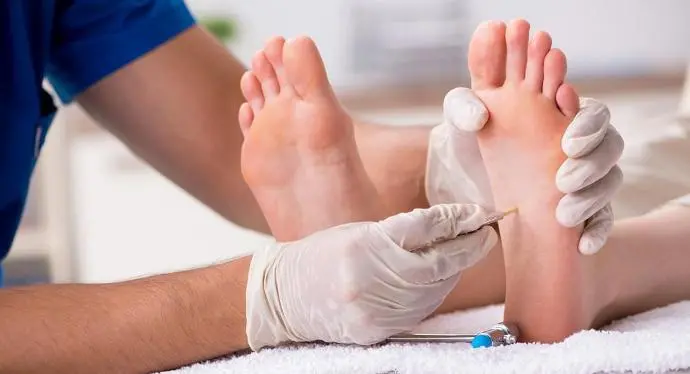
Diabetiker bör besöka en fotterapeut regelbundet. Fotpulsar och känsel bör kontrolleras ofta, eftersom nedsatt känsel i fötterna är vanligt hos dem som haft diabetes länge. Cirkulationen är ofta också nedsatt.
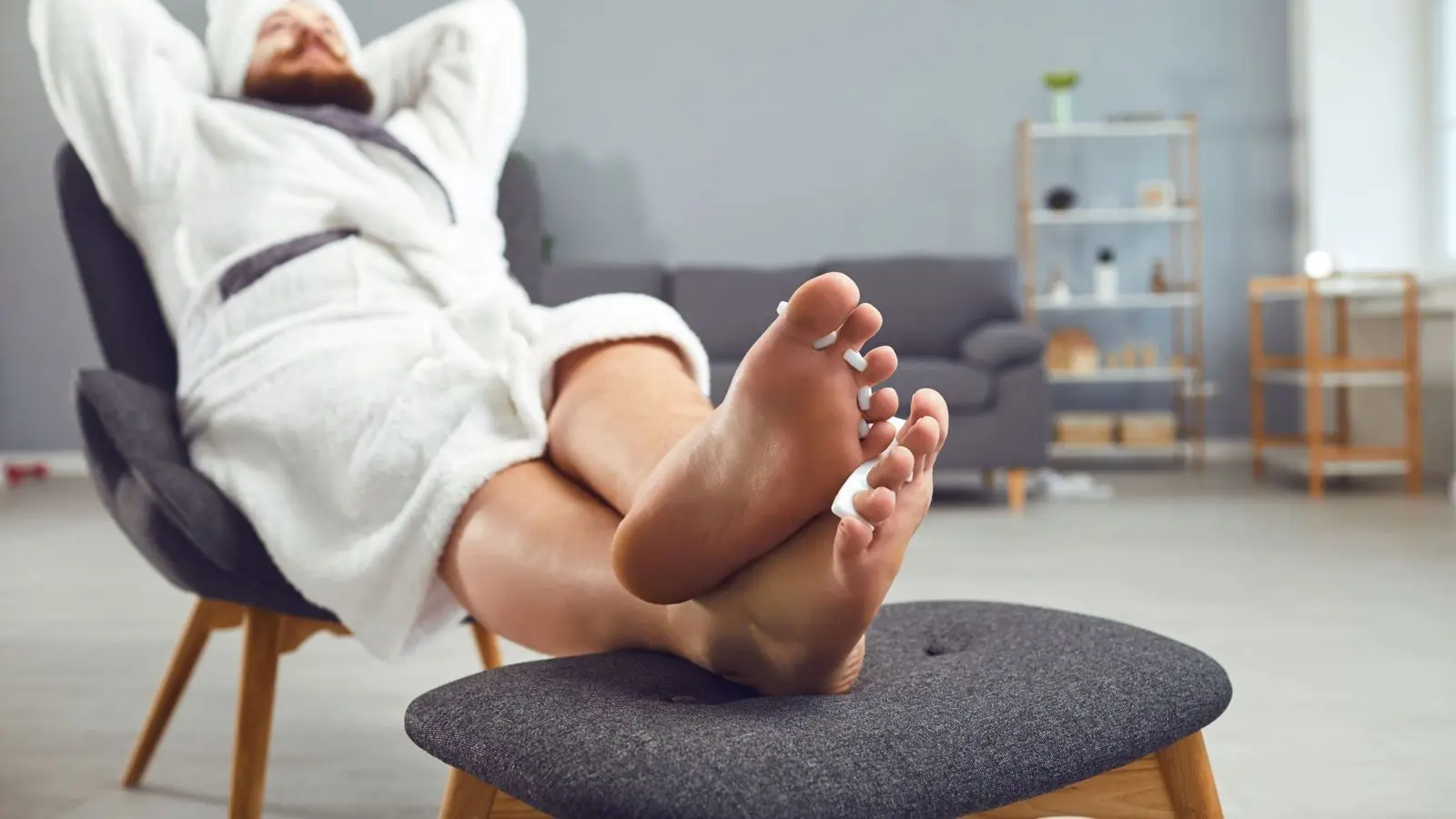
Grunden för diabetisk fotvård är att hålla fötterna mjuka och välskötta för att förhindra sprickor och sår.
Det är också möjligt att få läkarremiss för fotvård — KELA-ersättning kan vara möjlig.
Boka din tid:
Medicinsk fotvård för diabetiker – 60 min
Omfattande fotbehandling anpassad för diabetespatienter, inklusive nagel- och hudvård, cirkulationskontroll och personlig vägledning.
Diabetisk fotbedömning – 30 min
En fokuserad undersökning av diabetiska fötters tillstånd, inklusive pulsmätning, känseltest och riskbedömning.
Egenvård av diabetiska fötter
- Kontrollera dina fötter dagligen.
- Titta efter sår, sprickor, rodnad eller förändringar.
- Tvätta dina fötter regelbundet.
- Torka alltid noggrant mellan tårna.
- Blöt dina fötter ibland.
- Använd varmt vatten (34–36°C) för ett kort fotbad.
- Kontrollera alltid vattentemperaturen med en termometer — använd aldrig för varmt vatten.
- Applicera fuktgivande kräm på torr hud.
- Undvik att applicera kräm mellan tårna.
- Klipp tånaglarna regelbundet och rakt av.
- Om detta är svårt, boka tid hos en fotterapeut.
- Byt strumpor dagligen.
- Använd bomulls- eller ullstrumpor utan skavande sömmar eller tight resår.
- Gå aldrig barfota.
- Bär bekväma inneskor och välpassande skor alltid.
- Kontrollera alltid dina skor innan du tar på dig dem.
- Vänd dem upp och ner och ta bort småstenar eller främmande föremål.
- Värm aldrig dina fötter direkt på varma ytor.
Varför professionell diabetisk fotvård är viktig
Diabetes påverkar kroppens förmåga att läka och bekämpa infektioner. Med tiden kan förhöjda blodsockernivåer leda till diabetisk neuropati — ett tillstånd som minskar känseln i fötterna — och perifer artärsjukdom, som begränsar blodflödet till de nedre extremiteterna. Tillsammans innebär dessa komplikationer att även mindre skador som små sår, blåsor eller tryckskador kan utvecklas till allvarliga infektioner eller icke-läkande sår om de lämnas obehandlade.
Professionell diabetisk fotvård går utöver standardbehandlingar. På ihoHUD i Vasa utför våra utbildade specialister grundliga bedömningar som inkluderar perifer pulsmätning, monofilamentkänseltest och noggrann utvärdering av hudintegriteten. Dessa kliniska kontroller hjälper till att upptäcka tidiga varningssignaler för neuropati och cirkulationsproblem innan de utvecklas till allvarligare komplikationer.
Regelbundna professionella fotvårdsbesök säkerställer också att naglarna klipps korrekt för att förhindra inväxta naglar, förhårdnader och liktornar reduceras säkert och hudbarriären hålls intakt. Våra fotterapeuter ger individuell vägledning om dagliga fotvårdsrutiner, lämpliga skoval och fuktighetstekniker — allt anpassat efter diabetespatienters unika behov.
Tidig upptäckt och konsekvent förebyggande vård är de mest effektiva sätten att minska risken för diabetiska fotkomplikationer. Finlands Diabetesförbund rekommenderar att alla diabetespatienter får sina fötter undersökta av en vårdprofessionell minst en gång om året, med tätare besök för dem som har identifierade riskfaktorer.
Relaterade fotvårdstjänster
Vanliga frågor om diabetisk fotvård
Diabetes kan orsaka nervskador (neuropati) och dålig cirkulation i fötterna, vilket minskar förmågan att känna smärta och fördröjer sårläkning. Utan korrekt fotvård kan mindre skador gå obemärkt förbi och utvecklas till allvarliga infektioner eller sår. I allvarliga fall kan obehandlade fotproblem leda till amputation. Regelbunden professionell fotvård hjälper till att upptäcka problem tidigt och håller fötterna friska.
Diabetespatienter bör som minimum genomgå en omfattande fotundersökning en gång om året. Om du dock har neuropati, dålig cirkulation, tidigare fotsår eller andra riskfaktorer rekommenderas tätare besök var 2–3 månad. Din fotterapeut kommer att ge råd om lämpligt schema baserat på din individuella riskbedömning.
Monofilamenttestet är en enkel, smärtfri klinisk undersökning som används för att bedöma skyddande känsel i fötterna. En tunn, flexibel nylonfilament trycks mot specifika punkter på fotsulan. Om du inte kan känna filamentet indikerar det nedsatt känsel (perifer neuropati), vilket avsevärt ökar risken för obemärkta skador. Detta test är en standarddel av vår diabetiska fotbedömning på ihoHUD.
Varningssignaler inkluderar stickningar eller domningar i fötterna, kalla eller missfärgade tår, långsamt läkande sår eller skärsår, ihållande rodnad eller svullnad, torr och sprickande hud, förtjockade eller missfärgade naglar samt smärta eller kramper i vaderna vid gång. Om du märker något av dessa symtom, boka en professionell fotbedömning omgående. Tidig intervention är avgörande för att förhindra komplikationer.
Med läkarremiss kan diabetisk fotvård kvalificera för delvis KELA-ersättning i Finland. Remissen ska specificera det medicinska behovet av podiatrisk behandling på grund av diabetesrelaterade komplikationer. Vi rekommenderar att du konsulterar din behandlande läkare om att få en remiss, särskilt om du har dokumenterad neuropati eller cirkulationsproblem. Vår klinik kan tillhandahålla nödvändig dokumentation för ersättningsanspråk.